
Rajasthan, India
Ranthambore Travel Guide 2026: Tiger Safari, Fort & Things to Do
Explore Ranthambore in 2026 with this travel guide covering tiger safaris, Ranthambore Fort, lakes, wildlife, the best time to visit, how to reach and where to stay.
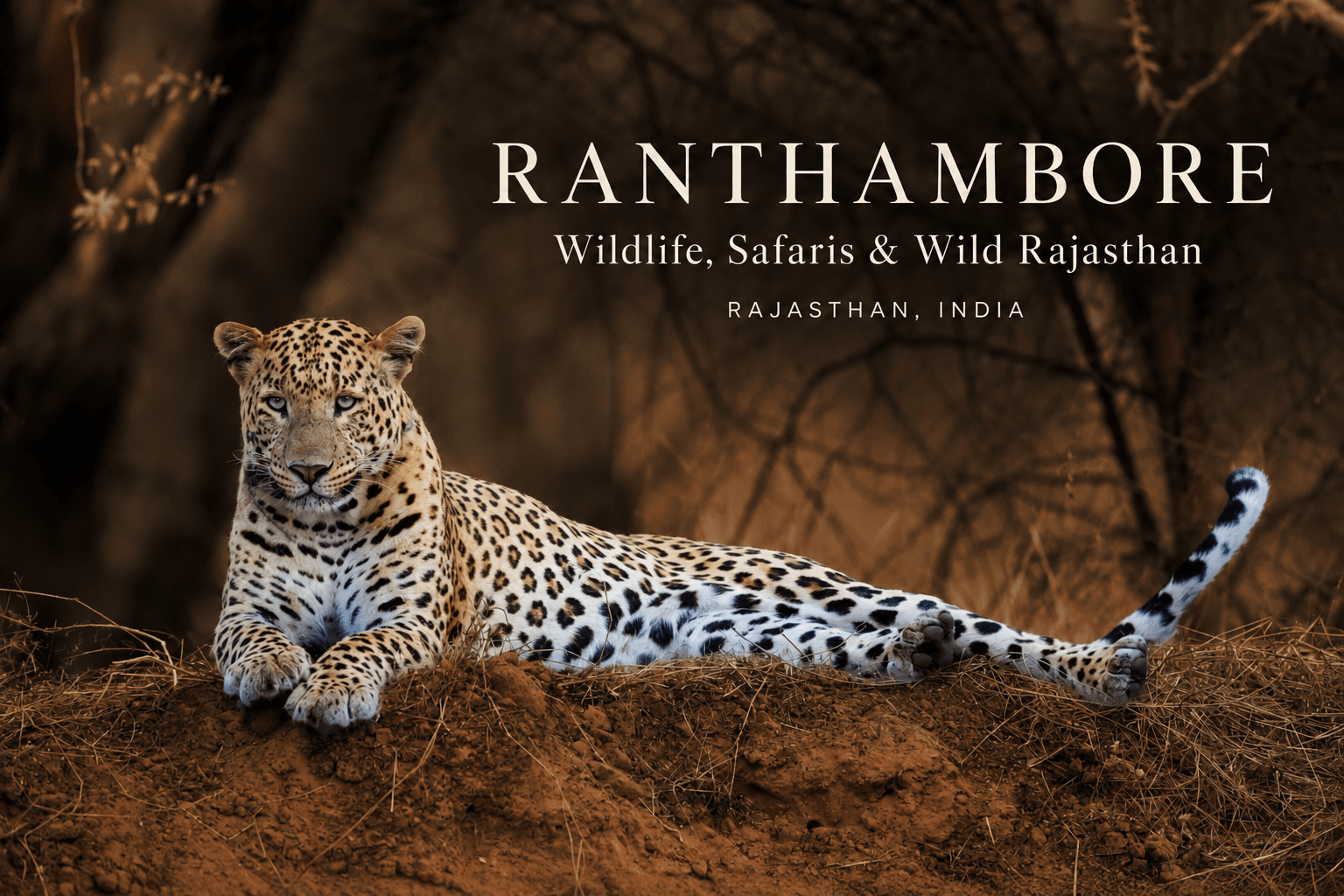
Ranthambore offers a very different side of Rajasthan.
Instead of grand city palaces and desert landscapes, the region combines dry forests, ancient ruins, lakes and one of India's best-known tiger habitats.
Located near Sawai Madhopur, Ranthambore is best known for its wildlife safaris, but the experience goes beyond tiger spotting. The historic Ranthambore Fort rises above the landscape, while lakes, temples and forest trails add another layer to the trip.
If you are planning a Rajasthan trip between October and June, Ranthambore can be a natural addition to an itinerary that already includes destinations such as Jaipur, Udaipur or Bundi.
Best Places to Visit in Ranthambore
1. Ranthambore National Park
Ranthambore National Park is the main attraction of the region.
The protected landscape consists of dry deciduous forests, grasslands, lakes and rocky terrain. It is particularly famous for its Bengal tigers, but the park is also home to leopards, sloth bears, sambar deer, chital, nilgai, langurs, crocodiles and many species of birds.
The best way to experience the park is through an authorised safari.
Best time to visit: October to June
Best for: Wildlife, photography and safari experiences
2. Ranthambore Fort
Ranthambore Fort sits on a hill above the surrounding forest and is one of the most striking landmarks in the area.
The fort has centuries of history and contains temples, gateways, ruins and viewpoints overlooking the surrounding landscape.
Combining the fort with a wildlife safari makes Ranthambore different from many other wildlife destinations in India.
Best time to visit: Morning or late afternoon
Best for: History, architecture and panoramic views
3. Padam Pala Lake
Padam Pala Lake is one of the best-known water bodies inside Ranthambore.
The lake is surrounded by forest and is particularly interesting for wildlife watchers because animals often visit water sources within the reserve.
Jogi Mahal stands near the lake and has become one of the recognisable landmarks associated with Ranthambore.
Best time to visit: Early morning or during a safari
Best for: Wildlife, landscapes and photography
4. Surwal Lake
Surwal Lake is a seasonal wetland located near Ranthambore and is known for birdwatching.
During the suitable season, the area can attract a variety of resident and migratory birds. It is a quieter option for travellers who want to experience the region beyond the main safari routes.
Best time to visit: Winter and early morning
Best for: Birdwatching, photography and nature
5. Trinetra Ganesh Temple
Trinetra Ganesh Temple is located within the Ranthambore Fort complex.
The temple is an important religious site and is closely connected with the history and cultural identity of the fort.
Visitors exploring Ranthambore Fort can include the temple as part of the same visit.
Best time to visit: Morning
Best for: Culture, history and pilgrimage
Best Things to Do in Ranthambore
Go on a Tiger Safari
A safari is the main reason many travellers visit Ranthambore.
Safari drives take visitors through the reserve in search of wildlife. Tigers are the headline attraction, but every safari is different and sightings of any particular animal are never guaranteed.
Keep your expectations flexible and focus on the complete wildlife experience rather than only looking for a tiger.
Explore Ranthambore Fort
Set aside a few hours to explore the fort.
Walk through its historic gateways, temples and ruins, and take time to look across the forest landscape from the higher sections.
The combination of history and wilderness is one of the defining features of Ranthambore.
Go Birdwatching
Ranthambore is not only about mammals.
The forests and wetlands support a wide variety of birds, making the region interesting for photographers and birdwatchers.
Carry binoculars if birdwatching is an important part of your trip.
Try Wildlife Photography
The open landscapes, lakes, old ruins and changing light can create excellent photography opportunities.
A telephoto lens is useful for wildlife, while a wider lens can help capture the landscape around the fort and forest.
Always follow safari rules and maintain a safe distance from wildlife.
Ranthambore Safari Guide
Ranthambore safaris are conducted through authorised arrangements managed by the Rajasthan Forest Department.
Safari permits can be booked online through the Rajasthan Forest Department's official system. Availability, safari zones, vehicle options and timings can vary, so check the official booking system before planning your visit.
You will generally encounter two common safari vehicle formats:
- Gypsy: A smaller open safari vehicle
- Canter: A larger open vehicle carrying a bigger group
If wildlife photography is important to you, consider your vehicle choice and group size while making the booking.
A few things are worth remembering:
- Book your safari in advance during busy periods.
- Carry valid identification required for the booking.
- Follow instructions from your driver and guide.
- Do not ask drivers to chase or approach animals.
- Keep noise to a minimum.
- Never feed wildlife.
- Tiger sightings are never guaranteed.
The most memorable safari is not necessarily the one where you see the most animals. Sometimes the forest itself, a herd of deer, birds around a lake or an unexpected wildlife encounter becomes the highlight.
Wildlife You Can See in Ranthambore
Tigers are the biggest attraction, but Ranthambore supports a much wider range of wildlife.
Depending on the season and your safari route, you may encounter:
- Bengal tigers
- Leopards
- Sloth bears
- Sambar deer
- Chital
- Nilgai
- Wild boar
- Langurs
- Crocodiles
- Jackals
- Hyenas
- Peafowl
- Water birds and forest birds
The landscape changes considerably between seasons, so the character of a safari can also change throughout the year.
Best Time to Visit Ranthambore
Ranthambore is generally open for tourism from October through June.
October to February
This period offers cooler weather and is comfortable for combining safaris with sightseeing.
October and November can also be a good time to explore the fort and surrounding attractions without the intense summer heat.
March to June
Temperatures rise considerably during these months.
The heat can make afternoon sightseeing uncomfortable, so early-morning activities are preferable when possible.
If you travel during the hotter months, carry enough water, use sun protection and plan outdoor activities carefully.
July to September
The monsoon period can affect access to wildlife areas and safari operations. Check the latest official information before planning a monsoon visit.
For a first Ranthambore trip, October to February is a comfortable period for combining wildlife and sightseeing.
How to Reach Ranthambore
Ranthambore is located near Sawai Madhopur in eastern Rajasthan.
By Train
Sawai Madhopur is the main railway station for Ranthambore.
The station has rail connections with major cities and is one of the easiest ways to reach the destination.
From the station, you can continue by taxi or local transport towards your accommodation.
By Road
Ranthambore can be reached by road from Jaipur, Delhi and other parts of Rajasthan.
It works particularly well as part of a Rajasthan road trip.
By Air
For travellers arriving by flight, Jaipur is the major airport commonly used for reaching the Ranthambore region.
From Jaipur, you can continue by road or train towards Sawai Madhopur.
Where to Stay in Ranthambore
Most travellers stay around Sawai Madhopur or near the approach roads to the national park.
Accommodation ranges from simple guesthouses and budget hotels to resorts and wildlife-focused stays.
When choosing where to stay, check the distance from your safari pickup point rather than focusing only on the property itself.
If you are planning multiple safaris, staying closer to the park can make early-morning departures easier.
Is Ranthambore Worth Visiting?
Ranthambore is a good destination for travellers who want to combine wildlife with history.
A trip here can include a morning safari, a visit to an ancient fort, time around the lakes and relaxed evenings at a forest-side stay.
It also works well as a short addition to a longer Rajasthan trip rather than requiring a separate long holiday.
The key is to visit with realistic expectations. Ranthambore is a wild habitat, not a zoo, so tiger sightings and other wildlife encounters cannot be guaranteed.
Final Thoughts
Ranthambore brings together two experiences that rarely feel this connected: wildlife and history.
You can spend an early morning travelling through forest roads looking for a tiger and later stand inside a centuries-old fort overlooking the same landscape.
That combination is what makes Ranthambore more than just a safari destination.
If you are planning a Rajasthan trip this season, consider giving Ranthambore enough time for at least one safari and a proper visit to the fort rather than treating it as a quick stop.
For travellers who enjoy wildlife, photography, history and outdoor experiences, Ranthambore offers a very different perspective on Rajasthan.
Plan Your Ranthambore Trip
Looking for more places to explore in Rajasthan? Read our Rajasthan Travel Guide 2026 for more destinations and travel ideas.
You can also explore more destinations on Trawhiz Destinations.
Before your trip, play Pack My Bag and see how well you can pack for your next journey.
Photo by Umashankar Arora: https://www.pexels.com/photo/lying-leopard-on-ground-18947948/